Mary of Magdala, Meditation Day Six
Studying the pictureMary of Magdala recognises the Lord. She is stretching out her hand as if she wants to touch Jesus. She is like the woman who touched Jesus’ robe in order to be healed. Jesus’ answering gesture suggests something like: “Sorry, I have to go now. So have you. I have already given you power to go and bear witness.” On the other side of Christ we see the other women that have come to the grave with Mary. Their mind is still set on completing the funeral rites. They have their backs turned to him to show they are still at the graveside. This scene in re-lived again and again in art from the second century onwards. We see it portrayed on sarcophagi, obviously in connection with the death of Christians. Later it appears on church doors and in the capitols of columns, in church windows, in the enormous stone carvings above the inner and outer doors of cathedrals, in short it is found all over the place. | 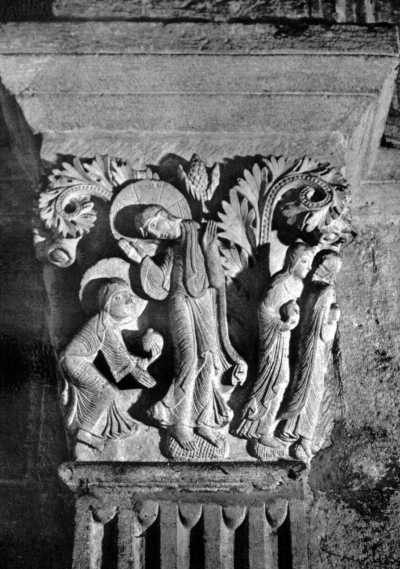 Christ’s apparition to the Magdalene. Carved capitol in the Cathedral of Autun, France. 12th century. |
ReflectionThis scene is obviously part of those things the Church wants the faithful to remember. That part of the Good News which was later suppressed in the Acts of the Apostles that women met the Lord and were commissioned by him. It found its way into the buildings of the Church, arising spontaneously from the sensus fidei, the inner treasure of faith Christians carry in their souls. Early liturgists too found a way to commemorate the ministry of Mary of Magdala during the years when Jesus was with us. Remember the Easter hymn Victimae paschali laudes? “Dic nobis, Maria, quid vidisti in via?” — “Tell us Mary what you saw on the way?” Look it up in any missal that dates from before Vatican Two. Is our own commission as Jesus’ disciples, whether we are women or men, carved in our deepest consciousness? | |