Misuse of Authority. ALERT 1
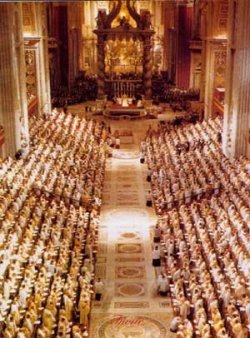
The laityThe word 'laity' derives from the Greek word laos, which means: people. They are the People of God. Scripture calls them 'a chosen race, a royal priesthood, a consecrated nation, a people set apart' (1 Peter 2,9; see Exodus 19,5-6). However, at present they have been reduced to a secondary position.
| |
These are the principles laid down in Church documents: * “The faithful who, by baptism are incorporated into Christ, are placed in the people of God, and in their own way share the priestly, prophetic and kingly office of Christ, and to the best of their ability carry on the mission of the whole Christian people in the Church and in the world.” Lumen Gentium , § 31 * “Although by Christ's will, some persons are established as teachers, dispensers of mysteries and pastors of the others, there remains, nevertheless, a true equality between all with regard to the dignity and to the activity which is common to all the faithful.” Lumen Gentium , § 32 * “Bishops should preserve for their faithful the share proper to them in Church affairs. They should recognise the duty and right of the faithful to collaborate actively in the building up of the Mystical Body of Christ.” Christus Dominus, § 16 * “All the faithful, both clerical and lay, should be accorded a lawful freedom of inquiry, freedom of thought and freedom of expression, tempered by humility and courage, in whatever branch of studies they have specialised.” Gaudium et Spes, § 62 | |
1. Matters of Faith
ALERT 1.1 |
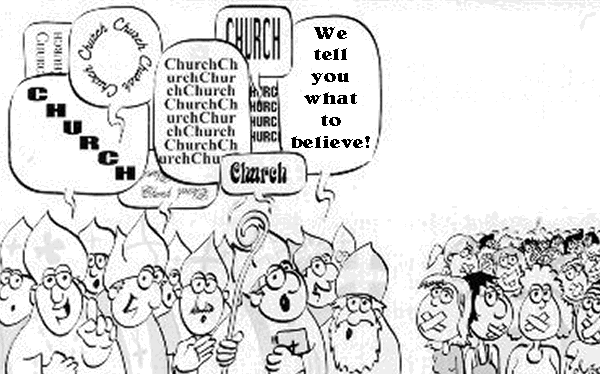
The Second Vatican Council declared that the Church's inerrancy is carried by the whole People of God. Traditionally this awareness of the contents of revealed faith has been called the sense of faith, or more fully the sense of the faithful. But the present Pope and his Vatican officials do not take note of what the vast majority of Catholics think. |
Online documentation
|
2. Government

ALERT 1.2 |
In spite of the Second Vatican Council's decrees that define the Catholic Church in terms of the People of God and that call for real co-responsibility of the laity in all levels of the Church: national, diocesan and parish, Vatican authorities have done everything possible to reduce the influence of lay people on Church governance. |
Online documentation
|
3. Sacrality
1.3 The laity are kept out of holy spaces through control of the liturgy and ministries. |
The Vatican has reintroduced strong concepts of the sacred and the profane as two distinct spheres in the Church, in spite of the fact that Christ abolished that distinction. And, of course, women are considered a ritual risk for 'holy places': they might cause pollution through menstruation. |
Online documentation
|
Books about this in print
|
4. Sexuality

ALERT 1.4 |
Guidance regarding sexuality does, to some extent, fall under pastoral care because of the ethical issues involved. On the other hand, professional experts, such as doctors, psychologists, social workers are usually better placed to counsel people. Moreover, people are much more adult today, and many decisions regarding one's private sexual life should be left to the discretion and conscience of the individual. |
Online documentation
|
5. Result: EMIGRATION

ALERT 1.5 |
The paternalistic approach of Church leaders and the failure to involve people more directly in planning, administration, evangelization and the ministries, have detrimental consequences. People leave. Many of the faithful are voting with their feet and staying away from Church services. Others may still attend Mass but intrinsecally they detach themselves from what Church leaders believe and prescribe. |
Online documentation
|
 |  |  |  |
|---|---|---|---|
For a new vision, see: Authority in the Catholic Church |